Short answer
Braces use fixed brackets and wires, while clear aligners use a planned sequence of removable trays. Braces can manage a broad range of tooth and bite movements without relying on daily removal decisions. Aligners are less visible and make eating and cleaning easier, but they must be worn as prescribed and are not appropriate for every case. The right option follows examination, records and a diagnosis—not appearance alone.
Key takeaways
- Braces are fixed; aligners are removable and depend heavily on consistent wear.
- Aligners can treat many alignment and bite concerns, but some movements are more predictable with braces or referral.
- Both options require healthy teeth and gums, monitoring and retainers afterward.
- Mail-order trays without a complete clinical assessment can miss decay, gum disease and root or bite concerns.
Braces and clear aligners move teeth by applying controlled forces over time. Braces use brackets attached to the teeth and a wire that guides movement. Aligners use a sequence of removable trays made for planned stages.
The decision is not simply visible metal versus invisible plastic. Bite complexity, root position, gum and bone health, patient age, daily habits and the predictability of specific movements all matter.
How do braces work?
Brackets are bonded to teeth and connected by an archwire. The clinician changes wires, adds elastics or uses other components to direct movement. Because the appliance stays attached, treatment continues without the patient deciding whether to put it back after meals.
Fixed appliances can manage a broad range of crowding, spacing, rotations and bite discrepancies. They also allow the clinician to make detailed adjustments during treatment.
Their disadvantages include visibility, dietary restrictions and more difficult cleaning around brackets and wires. Broken brackets or wires may require an extra appointment.
How do clear aligners work?
Aligners are thin transparent trays custom-formed for the teeth. Each set applies pressure toward the next planned position, then is replaced according to the prescribed schedule. Tooth-coloured attachments may be bonded to selected teeth to improve control, and elastics may sometimes be used.
Trays are removed for eating, most drinks, brushing and flossing. This makes hygiene more familiar but creates a compliance requirement. An aligner left out for long periods cannot deliver the planned movement.
Regal Heights describes its current clear-aligner pathway on the Invisalign service page. Suitability must be assessed clinically.
Which option treats more complex problems?
Braces can treat a very wide range of tooth and bite movements. Clear aligners can treat many mild, moderate and selected complex cases, but some rotations, vertical movements, large space closures or jaw relationships may be more predictable with fixed appliances or specialist care.
Software can display a proposed sequence, but a digital animation is not a guarantee. Teeth move within living bone and respond differently. Root anatomy, gum support and patient wear affect the result.
When a case falls outside Regal Heights’ confirmed scope, referral to an orthodontist is appropriate. The recommendation should protect function and periodontal health rather than prioritize one product.
Which is less visible?
Clear aligners are less noticeable, but they are not invisible. Attachments can be visible, trays may reflect light and elastics may be required. Braces can use metal or more discreet ceramic brackets, though wires remain visible.
Appearance matters, especially for work, school or events, but it should not override treatment predictability. Ask whether the preferred appliance can accomplish the necessary movements and what compromises might remain.
Aligners can be removed briefly for an important event, but frequent removal reduces effective wear time.
Which is easier to keep clean?
Aligners are removed so patients can brush and clean between teeth normally. Teeth should be cleaned before trays are reinserted, because trapping sugar and plaque against enamel can increase cavity and gum risk.
Braces require cleaning around brackets, under wires and between teeth. Interdental brushes, floss threaders or water flossers may help. Professional hygiene may need adaptation.
Neither option protects against decay. Active cavities and gum inflammation should be controlled before movement begins, and home care must remain effective during treatment.
What can I eat?
With braces, hard and sticky foods can break brackets or distort wires. Foods may need to be cut into smaller pieces, and biting directly into hard items should be avoided.
Aligners are removed for meals, so food selection is less restricted. However, repeatedly sipping sweet or acidic drinks while wearing trays can create prolonged exposure. Water is usually the appropriate drink with aligners in place.
After eating, clean teeth and rinse or clean the trays before reinsertion. Do not use very hot water that could distort the material.
Which option requires more self-discipline?
Aligners require consistent wear, commonly around 20 to 22 hours daily depending on the prescription. They must be stored safely during meals, changed on schedule and brought to appointments. Lost trays can interrupt progress.
Braces remove the wear decision but still require cooperation with elastics, hygiene, food restrictions and appointments. A fixed appliance does not make treatment automatic.
Discuss work shifts, school, sports, sensory preferences and previous appliance habits honestly. The best theoretical appliance can fail if it does not fit daily life.
How do comfort and speech compare?
Both approaches can cause temporary tenderness after activation or a new tray. Brackets and wire ends may irritate cheeks and lips. Aligners can create pressure, edge irritation, dryness or temporary changes in speech.
Orthodontic wax can protect selected bracket areas. A rough aligner edge should be reviewed rather than aggressively trimmed at home. Sharp, persistent pain, swelling or a tooth that feels unexpectedly mobile deserves contact.
Most speech adaptation improves with practice, but jobs requiring continuous speaking may influence preference.
What records are needed?
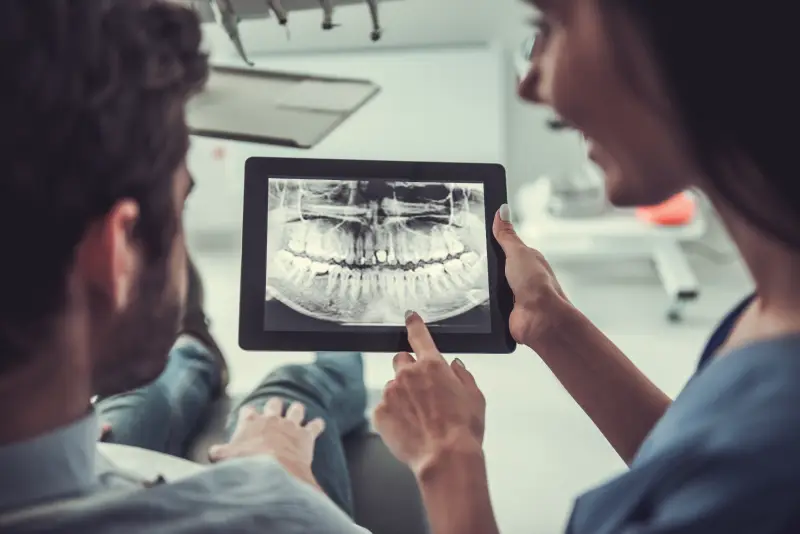
Assessment includes medical and dental history, teeth and gums, bite, jaw relationships and restorative condition. Photographs, scans or impressions document the starting point. Dental X-rays may be recommended when diagnostic benefit justifies them to assess roots, bone, tooth position and development.
Previous images should be requested when useful rather than automatically repeated. A complete examination helps identify disease that should be treated before movement.
Direct-to-consumer impressions without a clinical exam can miss decay, periodontal loss, impacted teeth, root shortening or a bite problem that changes the plan.
What happens during treatment?
Braces require adjustment visits to change wires and monitor movement. Aligners require checks to confirm that teeth are tracking the planned trays. Refinement scans and additional trays may be needed.
Appointments also monitor hygiene, gum response, wear and bite. If movement is not occurring as expected, the clinician may change the sequence, add attachments, use auxiliaries or recommend another approach.
Treatment estimates are not deadlines. Missed appointments, broken appliances, low aligner wear and biological response affect timing.
Do I need retainers afterward?
Yes. Teeth can shift after active treatment because fibres, bone and functional forces continue to adapt. Retainers may be removable or fixed, and some patients use both.
Follow the wear and cleaning schedule. A lost or broken retainer should be addressed before significant movement occurs. Long-term retention is usually part of orthodontic care, not an optional final accessory.
Bring removable retainers to follow-up visits and report a change in fit. A retainer that suddenly feels tight can indicate tooth movement; it should be assessed before it is forced into place.
Ask whether retainers and follow-up are included in the proposed fee.
How do cost and coverage compare?
Fees depend on complexity, duration, records, appliance system, refinements and provider. Clear aligners are not always more expensive, and braces are not always faster. Insurance may cover part of orthodontic care with age or lifetime limits.
Request a written plan explaining included visits, lost appliances, refinements, retainers and what happens if treatment extends. Cost should be evaluated alongside suitability rather than advertised as a simple product price.
Which option should I choose?
Start with the diagnosis. If both approaches can achieve a comparable result, visibility, hygiene, diet and compliance can guide the preference. If one appliance is more predictable for the bite or periodontal condition, that clinical difference carries more weight.
To learn whether clear aligners fit your needs, review Regal Heights Dental Centre’s Invisalign clear aligner service or contact our team for an assessment.
Frequently asked questions
Are clear aligners faster than braces?
Not automatically. Treatment time depends on the problem, planned movements, biology, appliance choice, wear and appointment attendance.
Can I eat while wearing aligners?
Aligners are generally removed for meals and for drinks other than water, then teeth are cleaned before reinsertion. Follow the treating clinician’s instructions.
Do clear aligners hurt?
Both braces and aligners can create temporary pressure or tenderness as teeth move. Sharp, persistent or unusual pain should be reported.
Will I need a retainer?
Yes, retention is normally required after either approach because teeth can move after active treatment. The design and wear schedule are individualized.